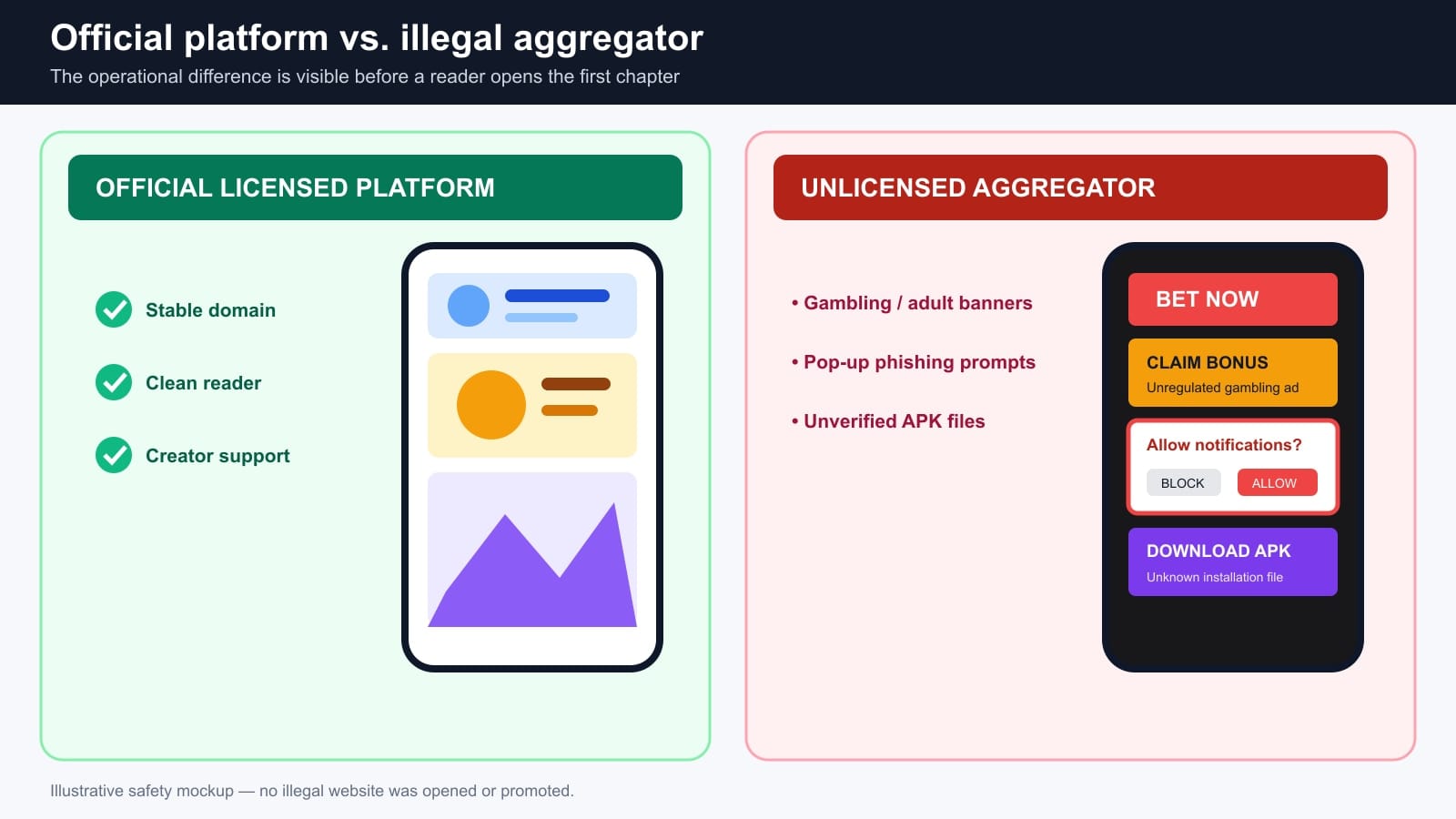
Reading digital comics has become a daily ritual for millions of readers in Korea. When browsing for popular series, readers inevitably face a choice: read on official licensed platforms like Naver Webtoon and KakaoPage, or use illegal free aggregator sites like Newtokki or Azitoon that promise instant access to every chapter without spending a single won.
At first glance, illegal aggregator sites seem like a convenient shortcut to bypass purchasing platform currencies like Cookies (쿠키) or Cash (캐시). However, these unauthorized sites are not free public services. They are illegal commercial operations that generate revenue through security exploits, explicit pop-up ads, and unregulated gambling banners.
This guide explains the operational differences between official webtoon platforms and illegal free aggregators, exposes the severe security risks of piracy sites, and shows how official fast-pass systems protect author livelihoods.
How image compression and domain blocks ruin the reading experience
The technical reading experience on illegal aggregator sites is vastly inferior to official platforms due to web scraping limits and government anti-piracy crackdowns.
High-definition raw panels vs compressed blurriness
Official platforms like Naver Webtoon (네이버웹툰) serve high-definition digital image files optimized for vertical mobile scrolling. Artists spend dozens of hours color-grading and detail-retouching every panel.
Illegal aggregator sites use automated scraping bots to steal these images, compressing the files heavily to save server bandwidth. This results in pixelated artwork, blurry text bubbles, and washed-out colors that distort the artist's original vision.
The domain shift problem
To combat digital piracy, Korean government agencies like KCOPA (한국저작권보호원) and the Korea Communications Commission (KCC) constantly block illegal aggregator web addresses (warning.or.kr).
To bypass these blocks, illegal sites continuously change their domain numbers (e.g., shifting from newtokki350 to newtokki351). These sudden domain migrations cause broken image links, missing mid-story chapters, and wiped reading bookmarks, destroying your reading continuity.
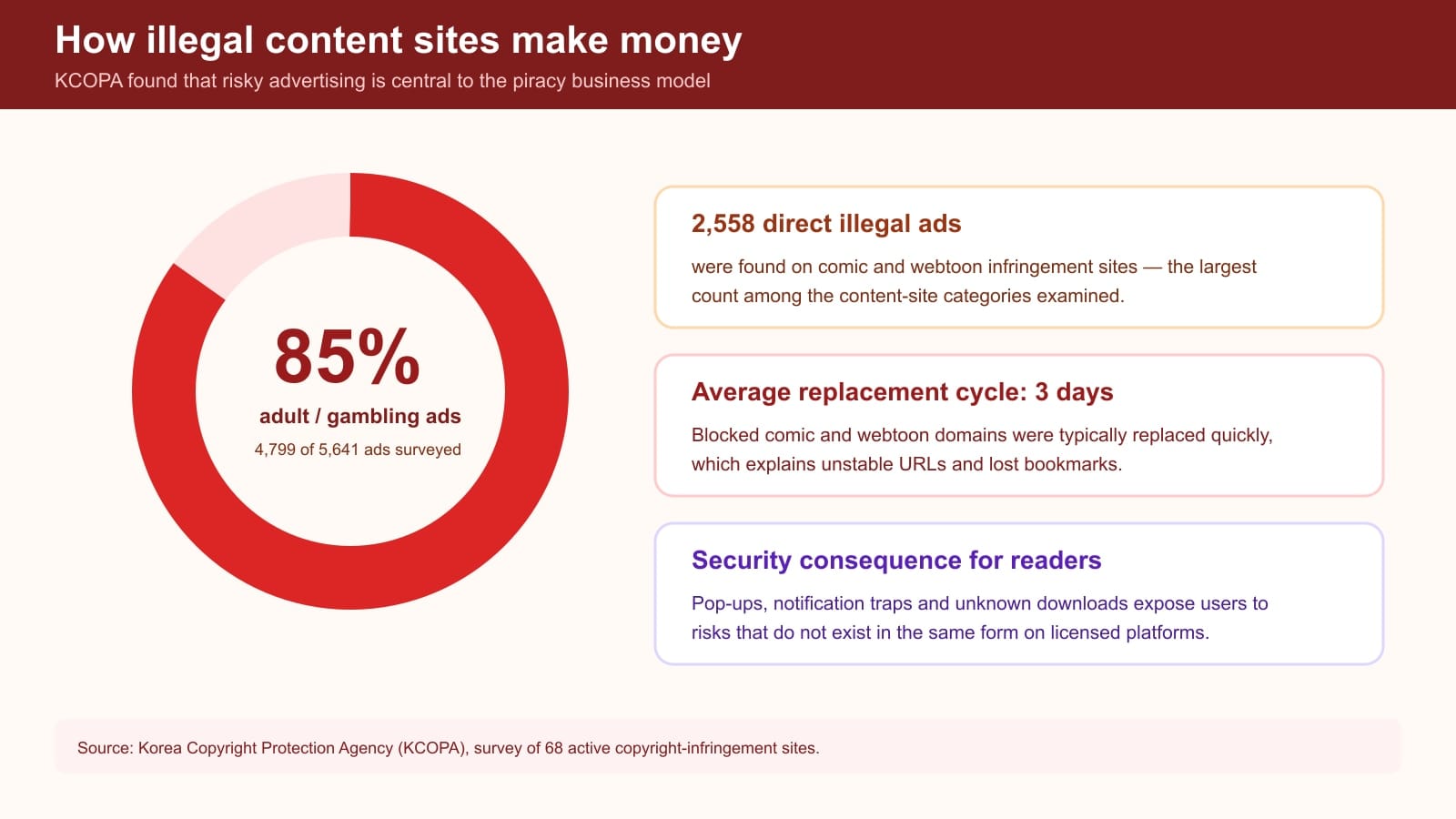
KCOPA data showing that adult and gambling promotions accounted for 85 percent of advertisements surveyed on copyright-infringement sites.The hidden security danger: Illegal gambling ads, phishing pop-ups, and fake APKs
The most significant danger of using illegal webtoon aggregators is the severe cybersecurity risk posed to your mobile device or PC.
How illegal ad banners fund piracy sites
Because legitimate corporate advertisers refuse to work with copyright-infringing websites, illegal aggregators monetize their traffic by hosting high-risk ad networks.
When you read on an unauthorized site, your screen is cluttered with flashing banners for illegal private gambling (불법 사설 도박 광고), unregulated loan sharking, and explicit adult scams. Tapping anywhere on the screen frequently opens unwanted pop-up tabs designed to trick you into entering personal details.
Malware risks from downloading unofficial app files
Many illegal webtoon sites encourage users to download Android application packages (APK files) directly from their web servers to bypass browser domain blocks.
Downloading an unverified APK file (불법 APK 파일) is extremely dangerous. These files often contain hidden trojans, keyloggers, or banking malware that harvest personal credentials and financial data from Korean smartphones.
How official Cookie and Cash systems protect author livelihoods
Understanding how legal webtoon monetization works reveals why supporting official platforms is essential for the future of the Korean digital comic industry.
The Cookie (쿠키) and Kakao Cash ecosystem
Official platforms operate structured monetization models, such as Naver Webtoon's "Fast-Pass Cookie" (쿠키 결제) previews and KakaoPage's "Free if you wait" (기다리면 무료) system.
When you purchase Cookies to read an unreleased chapter early, a substantial percentage of that payment goes directly to the webtoon author, background line-art assistants, and studio production teams.
The real cost of webtoon piracy
When readers consume webtoons on illegal aggregators, creators receive zero revenue. For mid-tier or newly debuted creators, high piracy rates directly threaten their livelihood.
When official platform metrics show declining Fast-Pass revenue because readers are migrating to piracy sites, publishers are often forced to cancel struggling series prematurely (연재 중단), leaving stories unfinished for everyone.
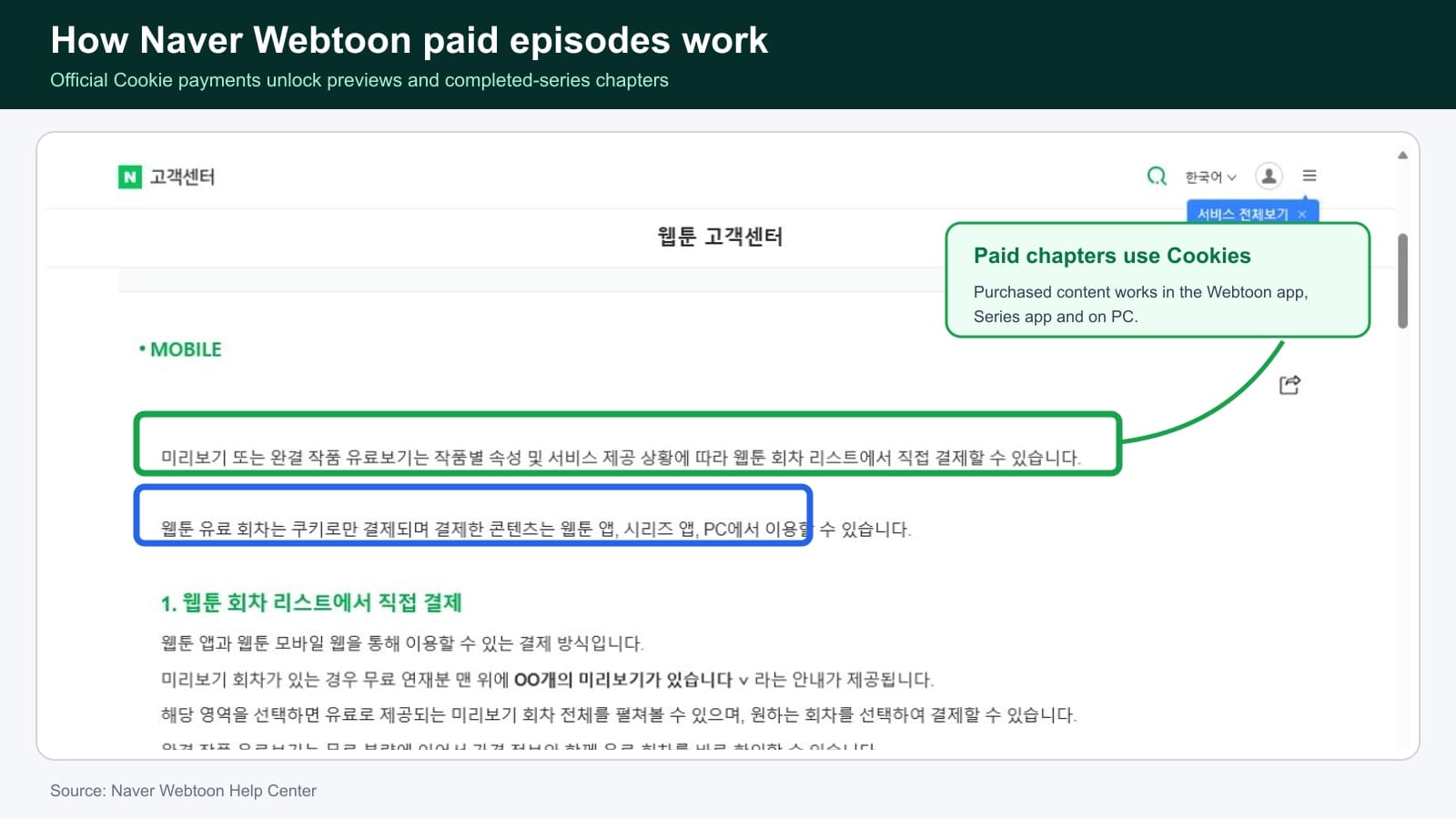
Naver Webtoon Help Center explaining that paid preview and completed-series episodes use Cookies and remain accessible across supported apps and PC.Official webtoon platform verification checklist: Official apps vs unauthorized aggregators
Use this reference table to verify whether a webtoon platform or app is a legitimate, authorized service:
Supporting official platforms ensures you enjoy crisp image quality and safe browsing while directly funding the creators who make your favorite stories possible.